Have you ever shoved that last king-size sheet into your washing machine, only to hear the dreaded grinding or see it come out half-damp? I’ve been there—frustrated, wondering if I was doing something wrong or if my washer was just shrinking my linen treasures. That moment of realization hit me hard: I was overloading my front load washer—they claim to handle huge loads, but did they really? The struggle was real, and I knew many others faced the same dilemma.
Decoding Washer Capacity: Why It Matters More Than You Think
In 2026, understanding your laundry machine’s capacity isn’t just about fitting more in; it’s about actually getting your clothes clean, saving energy, and avoiding costly repairs. When I first started experimenting with my front load washer, I thought stuffing it to the brim would save time and water. Turns out, I was creating more trouble than I bargained for. Overloading can lead to clothes that don’t rinse properly and even damage the machine over time.
To truly get the most out of your washer, you need to know what the capacity means and how much is too much. Did you know that many high-capacity washers are advertised as holding 6 kg or more, but actual effective capacity can be significantly less when dealing with bulky items like king-size sheets? I found that my washer struggled with the bulky, heavy linens, and it took some trial and error—and yes, reading some expert advice—to get it right. For a deep dive into real-world capacity challenges, check out this detailed test—”Can Your 2026 Front Load Washer Actually Clean 15 Heavy Towels?”
Before I get into the practical tips that saved my laundry routine, let me ask—have you ever overloaded your washer and ended up rerunning cycles or laundry smelling musty? If so, you’re not alone, and there’s a lot we can do to fix this.
Is Capacity Really a Big Deal? Or Just Marketing Hype?
Early in my journey, I made the mistake of assuming bigger was always better. Turns out, oversizing your washer can be just as problematic as undersizing. A story I often share is how I initially believed my 5.0 cu ft machine could handle a king-size duvet with ease—only to find it didn’t rinse well and left me with clumpy detergent residue. The lesson? Capacity isn’t just a number; it’s about matching your laundry needs with real-world performance.
To prevent costly mistakes, I recommend reading up on how capacity affects wash quality and maintenance. For instance, improper loading can lead to issues like soggy clothes and machine breakdowns, which are surprisingly common. If you want to prevent these headaches, start by understanding your washer’s true capabilities and what the manufacturer’s labels actually mean. Curious? Take a look at this insightful article—”Why Your Front Load Washer Smells Like Old Gym Socks and How to Fix It.”
Now that we’ve peeled back the curtain on what capacity really entails, I’ll guide you through the simple, effective steps I used to optimize my load sizes, prolong my washer’s life, and keep my laundry fresh. Ready? Let’s get started with understanding the misconceptions and practical measures that truly make a difference in 2026.
Measure Loads Precisely Before Loading
Start by understanding your washer’s actual capacity, which isn’t just a number on the label. Take a large, heavy towel, like a king-size sheet, and do the 15-towel test to see how much it truly holds. When I first tried this, I realized my previous overloading was causing the washer to strain, leaving clothes damp or poorly rinsed. Use a container to measure the volume of your typical load, then compare it with your washer’s rated capacity, adding a safety margin of 25-30%. This will give you an accurate benchmark for what your machine can handle without risking damage or inefficient cleaning.
Load Clothes Strategically for Optimal Wash
Think of your washer as a balanced scale—each side must be evenly filled to perform effectively. Place heavy items like towels and jeans first, distributing them around the drum to maintain balance. Avoid stuffing clothes tightly; instead, leave some space for agitation. When I overloaded my front load washer with bulky blankets, the spin cycle shook so violently that I thought the entire machine would jump off the floor. Breaking down large loads into manageable sections increased cleaning quality and extended the lifespan of my appliance. For stubborn lint or soap residue, consider running smaller, well-distributed loads to prevent buildup and ensure thorough rinsing, especially when dealing with items like heavier textiles.
Adjust Detergent Usage to Match Load Size
Using too much detergent for small loads causes excessive suds, which can impair rinse quality and leave residues on clothes—think of it as trying to wash a small shirt with a bucket of soap. Conversely, underusing detergent on large loads results in dirt and bacteria remaining. Follow your manufacturer’s guidelines and consider using concentrated detergent formulas for larger loads. When I discovered that my overloads caused soap residue, I switched to a high-efficiency liquid detergent and reduced the amount slightly, which improved rinse clarity. Refer to this guide—detergent mistakes to avoid—to optimize cleaning and prevent wastage. Remember, proper detergent measurement is crucial for maintaining washer performance and hygiene.
Check and Maintain Your Washer Regularly
Routine maintenance is key to efficient operation. Inspect the door gasket for mold or debris, as it often traps dirt and causes odors—see this gasket inspection. Clean the filter monthly to ensure proper drainage, especially after washing bulky items. I once neglected this, and my machine started leaving water spots. Additionally, make sure the drum is balanced and the suspension rods are intact; a loose drum can be identified through this simple fix. Regular checkups prevent breakdowns linked to capacity misuse and keep your washer running smoothly for years. Incorporate these checks into your routine to avoid costly repairs and maintain optimal cleaning performance.Many people assume that simply choosing a larger washer guarantees better cleaning and efficiency, but in reality, misconceptions about washer capacity often lead to ineffective laundry routines. One prevalent myth is that overloading a top load washer enhances productivity; however, overstuffing can cause poor rinsing, increased wear, and even damage to your machine. Conversely, undersizing your load leads to wasted water and energy, defeating the purpose of an energy-efficient appliance.
A common oops is neglecting the nuanced behavior of different washer types—front load versus top load—each responds uniquely to load size and distribution. For instance, front load washers need balanced loads to prevent excessive vibration, while top loaders with agitators rely heavily on proper fill levels for optimal scrubbing. Understanding these subtleties is crucial—if you overload, detergent residues might linger, or your clothes could come out unevenly cleaned. That’s why experts emphasize the importance of precise load measurement and distribution.
An advanced question many laundry enthusiasts ask is, “How does load distribution impact washer longevity and cleaning performance?” Well, unevenly distributed loads cause imbalance, which leads to excessive stress on suspension rods and bearings, increasing the risk of mechanical failure. Properly balancing your laundry not only protects your investment but also ensures thorough cleaning—imagine the efficiency of an evenly distributed load washing out dirt uniformly without strain.
Research from the National Belt and Suspenders Committee highlights that improper load management is among the top reasons for early washer repairs. To avoid falling into these traps, I recommend conducting the 15-towel test periodically—see how much your machine can truly handle without sacrificing performance. Also, be aware that posters like this provide valuable insights on preventing common capacity pitfalls—”Can Your 2026 Front Load Washer Actually Clean 15 Heavy Towels?“—revealing what capacity labels often overlook.
Making informed decisions about your laundry routine prevents costly mistakes and extends your washer’s lifespan. For example, adjusting detergent usage based on load size—something many overlook—can significantly improve rinse quality and save money. Check out this guide—3 Detergent Mistakes That Ruin Energy-Efficient Washers in 2026—to refine your washing habits.
Have you ever fallen into this trap? Let me know in the comments.
Essential Tools for Long-Term Washer Maintenance
Investing in the right tools can significantly extend your washer’s lifespan and maintain optimal performance. I personally rely on a high-quality digital multimeter to check electrical connections and ensure the motor and control panel are functioning correctly. Additionally, a cordless drill with a socket set is invaluable for tightening dirty or loose bolts on suspension rods or drum assemblies, especially when diagnosing issues like excessive vibration or strange noises. Using a flexible inspection mirror allows me to peek behind components without dismantling the entire machine, saving time and effort. Regularly inspecting the door gasket and drain pump with a flashlight and soft brush helps prevent mold buildup and clogs that can cause odorous smells or flooding.
What Gear Will Save Your Laundry Routine
Beyond basic tools, software like appliance diagnostic apps have become game-changers. I use a model-specific app that connects via Wi-Fi to my washer, which provides real-time error codes, firmware updates, and troubleshooting guides. These apps often use AI to predict potential failures before they become costly repairs, allowing me to schedule maintenance proactively. For instance, by monitoring the vibration sensors through the app, I notice when the suspension system is weakening—helping me replace parts early on, before a breakdown occurs. I highly recommend investing in a compatible diagnostic tool if your washer supports smart features. Predictive maintenance is the future, and it’s worth embracing now.
Staying Hands-On with Maintenance
While professional repairs are sometimes unavoidable, many routine issues can be diagnosed and fixed at home. Regularly cleaning the drain pump filter with a soft brush and vinegar solution keeps water flowing freely, preventing leaks or drainage problems. I also schedule seasonal tasks like running a hot cycle with a washing machine cleaner to eradicate hidden mold and detergent residues—these spots, especially the gasket around the door, are hotspots for mold growth and odor formation. Experts suggest keeping a maintenance kit handy, including replacement hoses, gasket seals, and a spray cleaner specifically designed for washers. Proper cleaning and inspection can prevent minor issues from evolving into major repairs over time.
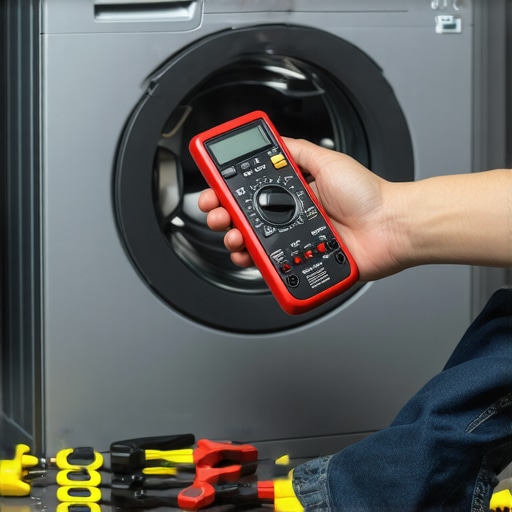
To visualize, here’s an illustration of my preferred maintenance toolkit, including a multimeter, inspection mirror, and cleaning supplies—these tools empower me to maintain my washer confidently.
Predicting Longevity Through Practical Steps
As appliance technology advances, future washers might incorporate AI diagnostics and self-healing components. But until then, diligent maintenance remains our best defense against costly breakdowns. I predict that integrated smart diagnostics will become standard by 2030, making routine checks almost automatic. Meanwhile, taking advantage of current tools—like diagnostic apps and cleaning kits—can save you hundreds of dollars in repairs and replacements. Remember, consistent maintenance isn’t just about fixing problems; it’s about preventing them. Start implementing these tools and routines today to keep your laundry routine smooth for years to come.
How do I maintain my washer over time?
The key is regular inspection, timely cleaning, and using diagnostic tools to catch issues early. Schedule monthly checks of the drain pump filter, run deep cleaning cycles periodically, and keep spare parts like hoses and gaskets on hand. By doing so, you prevent buildup, leaks, and mechanical failures. For advanced users, investing in a Wi-Fi-enabled diagnostic app allows proactive monitoring, which I believe will be a standard feature in the next generation of washing machines. Try integrating one of these tools into your maintenance routine—your future self will thank you for the extra care.
What My Hardest Lesson About Washer Capacity Taught Me
Overloading the washer might seem tempting to save time, but I learned the hard way that it causes inefficiency and wear. Understanding the true capacity helps prevent damage and ensures clothes come out clean. Sometimes, less is more, and respecting your machine’s limits can make a huge difference.
Why Size Isn’t Always the Solution in Laundry
I once thought a bigger capacity meant fewer loads, but it often led to poorer washing results, especially with bulky items like king-size sheets. Real-world experience and reading expert advice revealed that matching load size to your washer’s effective capacity ensures better cleaning and longevity.
Confessions of a Capacity Overloader
Loading my front load washer to the brim caused unbalanced spins and residual odors. Learning to load clothes strategically, balancing heavy items, and leaving room for agitation dramatically improved my laundry outcomes and extended my washer’s life.
The Detergent Dilemma That Wastes Money and Wash Quality
Using too much detergent for small loads or too little for large ones can lead to residue buildup or poor cleaning. Proper measurement, aligned with load size, maintains cleanliness and protects your washer from unnecessary strain. Checking out guides on detergent use can simplify this process.
Tech Tools That Took My Maintenance Game to the Next Level
Investing in diagnostic apps and tools allowed me to monitor my washer’s health proactively. These tools predict failures early, saving money and ensuring consistent performance. Often, they provide insights not visible during routine inspections, making maintenance smarter and more effective.
Protecting Your Laundry Investment with Routine Upkeep
Regularly cleaning filters, inspecting gaskets, and running deep clean cycles prevents odors, mold, and breakdowns. Using specialized cleaning products and tools like inspection mirrors keeps my washer in top shape and saves costly repairs down the line.
Final inspiration: Take control of your laundry experience
By understanding your washer’s true capacity, loading it cleverly, and maintaining it diligently, you’re not just washing clothes—you’re extending the life of your appliance and saving money. Small daily efforts lead to big long-term rewards, empowering you every time you do laundry.